Nothing
The Screwtape LettersNothing is the gradual, seemingly insignificant wasting of a person’s attention and time, which Screwtape presents as a powerful means of separating the patient from God. Rather than relying on dramatic vice, this strategy makes distraction and passivity sufficient: the patient’s best years can be lost in what he neither ought to do nor truly wants to do.
A Strategy of Mere Distraction
As the patient’s uneasiness and reluctance to face God grow, Screwtape says, his capacity for genuine happiness diminishes. Habits also make vanity, excitement, and flippancy less pleasurable while making them harder to give up. The result is that almost anything—or nothing at all—can occupy the attention that might otherwise go to prayer, work, or sleep.
The distractions need not be enjoyable or chosen for any substantial purpose. A column of advertisements in yesterday’s newspaper can replace a good book the patient likes; time can be spent talking with people he does not care about, on subjects that bore him. Screwtape’s point is not that these activities are inherently wicked, but that they can keep the patient from meaningful commitments while offering no genuine happiness in return.
Inertia and Lost Time
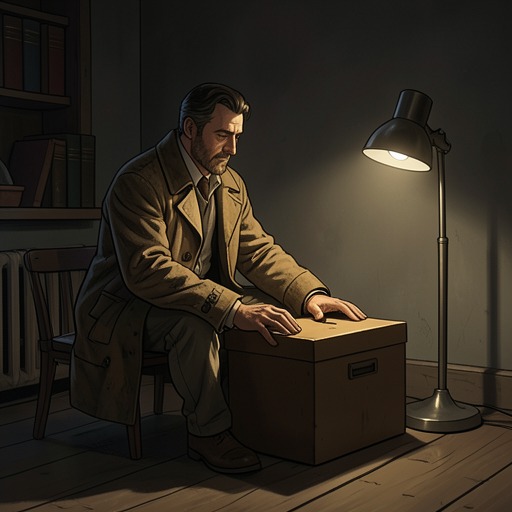
Nothing also takes the form of prolonged inactivity. Screwtape describes the patient being kept awake late, not at a revel, but doing nothing in particular. Healthy, outward-moving activities are inhibited, yet no worthwhile substitute is supplied. The resulting waste is not a dramatic fall but a succession of unchosen, empty intervals.
To give this pattern a human measure, Screwtape recalls a patient who, on arriving in Hell, recognized that he had spent most of his life doing neither what he ought nor what he liked. That retrospective recognition exposes the double loss at the center of Nothing: failure to act well is joined to failure to find real enjoyment. Time disappears without being claimed by either duty or pleasure.
The Meaning of “Nothing”
Screwtape invokes the Christian description of God as one “without whom Nothing is strong,” then turns the phrase toward the demonic strategy. Nothing, in his account, becomes strong not through a single decisive act but through accumulation. Small distractions can steal a person’s best years in mental wandering, weak curiosities, habitual gestures, disliked tunes, and daydreams too insubstantial to provide a clear motive yet difficult to shake once begun.
The catalogue moves from ordinary diversions to near-total passivity, making its very vagueness part of the idea. The patient’s attention is consumed by pursuits that he is only half aware of and that do not even offer the force of ambition or desire. Nothing is therefore not simply a lack of activity: it is a condition in which attention continues to move, but without direction, purpose, or satisfying result.
Cumulative Consequence
Screwtape anticipates that a young tempter might dismiss these as small sins while hoping to report spectacular wickedness. He rejects that measure of success. What matters is the extent to which the patient is separated from God; a minor diversion can serve as effectively as a grave offense if its cumulative effect is to edge him away from the Light and into Nothing.
The strategy’s danger lies in its gentle progression. Screwtape calls the gradual road the safest road to Hell: a soft, unobtrusive slope without sudden turns, milestones, or signposts. Nothing gives that image its mechanism. Repeated distractions and omissions make spiritual estrangement look less like a choice than a life quietly spent, which is why their apparent triviality is central to their power.